This question was at the heart of our discussions last summer as we brainstormed AI applications within our field of crisis communication. The idea arose to conduct a full-scale crisis simulation—the kind we’ve been conducting across the country for years—and to see whether such a simulation, using AI applications, would lead to more and better results in the same amount of time with fewer people.
So: Can AI fully replace current crisis communication roles, or does it merely serve as a useful supplement to the existing work?
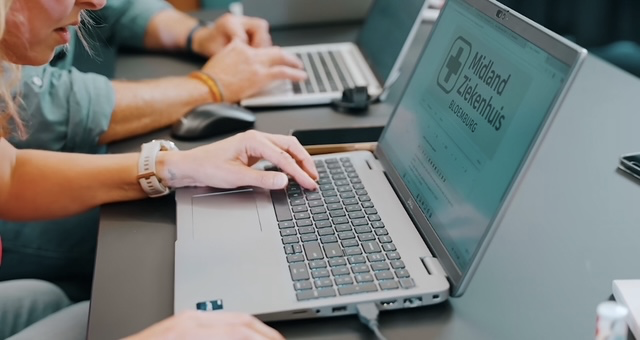
Just to clarify for an outsider. During a “normal” crisis, a crisis communications team has an important mission. Within a short period of time (often within minutes, but in any case within an hour), the team must conduct an environmental analysis, draft a preliminary communications strategy, hold a consultation meeting with the crisis team, and continuously update the website and social media with new content. Meanwhile, the phones are ringing off the hook, a spokesperson must be on hand, and a customer contact center may need to be activated. And on top of all that, this process must be managed by a team leader or coordinator. Quite a task, then.
To get that work done, you often need a team consisting of:
– environmental analyst;
– strategic communications consultant;
– (often several) editor(s);
– spokesperson(s);
– team leader/coordinator, possibly with a support staff member.
Soon there will be six to eight people. And that, in particular, isn't something every organization can achieve.

In late September 2025, we met up again somewhere in Amsterdam to put it to the test. Frank Vergeer brought along his colleague Thea Grasman to build a full-scale CCT: a two-person team, in other words. Opposite them, a so-called response cell (counterpart) was set up, consisting of three people who would fulfill various roles: those affected—such as patients, family members, staff, the media, emergency services, the municipality, internal stakeholders, and the “in-house” crisis management team—and so on. The whole shebang, just as we’ve practiced so many times before. On the media platform (Trainer Online Media), the response cell could post news and social media messages on behalf of those involved, the public, and the press. After the starting signal, we got to work for an hour and a half. And afterward, we would take stock during a regular debriefing.
In the simulation, as a two-person CCT, we were allowed to use the AI tool “FirstRing,” supplemented by an AI agent as a spokesperson, an AI agent as an environmental analyst, ChatGPT, and other AI models and tools of our choice. The simulation began, the phone started ringing, social media was flooded with questions, and we had to quickly deliver an initial “ Situational Awareness ” for the crisis team. Let’s get to work! It was an exciting simulation, and once again it became clear that the first hour, in particular, requires a tremendous amount of hard work to get the process up and running and keep it going—all while producing high-quality outputs within that timeframe that align with what’s happening in the external and internal worlds. That’s hard work—and it never stops!
After an hour and a half, the simulation was over. It was time to take stock and see if we had an answer to our most important question: Can AI outperform a crisis communications professional? Generally speaking: it can work well, and AI is a valuable addition, but you still have to keep thinking for yourself. Here are our findings:

Advantages:
– Significant benefits were identified for the field of analysis: a wealth of information was uncovered—more than an analyst can currently produce in such a short time. Very useful;
– Content production and adaptation: The tools are incredibly fast at creating content for a wide variety of target audiences and also adapt this content quickly and consistently to changing facts or circumstances across all deployed channels. This is done better and faster;
– Creativity: the AI is sometimes very creative in finding solutions to a specific problem—things you might quickly overlook or fail to consider in the heat of the moment. This applies to choosing a strategy or to your resource allocation andthe content of those channels;
– Progress tracking: AI can also help prioritize activities and track progress throughout the process. This can be very useful for a team leader or coordinator to maintain a clear overview of what needs to be done next and/or what has already been completed;
– For Spokespersons: Experiments have been conducted with an AI agent serving as a spokesperson on the phone. This can certainly add value when handling incoming questions. However, that agent has not yet been developed far enough;
– The AI can guide you through the crisis communication process, so you no longer need to have all the knowledge and checklists at your fingertips, but can focus more specifically on certain aspects during the crisis and through training.
Disadvantages:
– AI can still “hallucinate”: come up with something that wasn’t provided or is incorrect. The source of information must therefore always be carefully considered. AI can quickly make connections, but your own verification remains crucial to prevent you from basing assumptions on incorrect or unverified input;
– The amount of information generated by AI can be substantial. Before you know it, you’ll be suffering from information overload. This is particularly true for the “ public sentiment assessment ” and the foundation of the strategy. It is so comprehensive that it’s almost impossible to process;
– AI has a different sense of time than humans. You must actively guide AI through the passage of time, for example, by using timestamps and updates.
Tips:
– Keep thinking! AI cannot and will not completely replace a good analyst, strategist, or spokesperson—at least not yet. You must continue to evaluate whether an AI-generated approach is the right one. The professional remains responsible for strategic decisions and moral judgment;
– Be sure to use it, experiment, refine your methods and prompts, and discover ways to improve. The fact is that AI is here to stay and can certainly help improve and accelerate the crisis communication process;
– New tasks will also emerge:
* We believe fact-checking will become more important. This includes both checking AI-generated content for “hallucinations” and fact-checking the enormous amounts of disinformation and fake news that are being spread about us via social media using AI. Where does that information come from? Isn’t it derived from misinformation or disinformation? Which sources do we exclude from consideration altogether? These are questions that need to be properly addressed up front; source attribution by AI is therefore essential;
* Information management: The tools yield a lot of useful information, but a human brain is still needed to truly filter out the essence. This is especially important to make the right connections with the facts and figures from the crisis management team itself;
– Align vision with budget. The use of AI in crisis communication requires structural investment. Set aside budget not only for training and exercises, but also for AI tools, governance, and skills, so that AI does not remain a one-off gimmick but becomes a fully-fledged part of the crisis communication process.
So: Can AI beat the crisis communications professional?
Not yet, but it's not a competition either. AI applications are certainly a welcome addition to the work that needs to be done. But the human brain is still necessary. And that's a good thing.